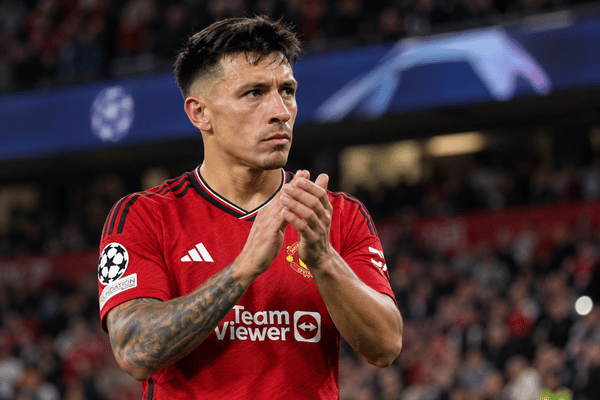
Manchester United’s turbulent start to the season has taken another dramatic turn after defender Lisandro Martínez publicly challenged the club’s leadership, raising questions about recruitment decisions and the direction of one of English soccer’s most recognizable institutions.
The Argentine international delivered his criticism following United’s 2-0 Champions League defeat to Atlético Madrid on Tuesday, a result that extended the team’s winless streak to five matches across all competitions.
Rather than placing responsibility exclusively on manager Michael Carrick or his teammates, Martínez directed attention toward the executives responsible for assembling the squad.
Director of football Jason Wilcox became a central figure in the controversy as Martínez questioned whether United had done enough during the summer transfer window to build a team capable of competing at the highest level.
The criticism came at a particularly difficult moment for United, whose return to Champions League competition followed a third-place Premier League finish last season. Expectations of further progress have instead given way to growing concern about the team’s performances.
Despite substantial spending on midfield reinforcements, questions have emerged about the balance of the squad and whether other positions received sufficient attention.
Martínez’s intervention has also highlighted potential divisions between the dressing room and the club’s decision-makers. Reports suggest that some teammates share his dissatisfaction with recruitment and squad depth, although those concerns have not resulted in a collective public statement.
The defender’s decision to speak openly has divided opinion.
Former Manchester United striker Wayne Rooney was among those who questioned the wisdom of publicly criticizing the club’s leadership, particularly when the team itself has struggled to deliver convincing performances.
The controversy has placed Martínez under additional scrutiny, with critics pointing to his own performances as evidence that responsibility for United’s difficulties cannot rest entirely with executives.
Carrick, meanwhile, faces the challenge of restoring confidence and producing results while attention increasingly shifts toward decisions made beyond the touchline.
The situation became more complicated when Martínez addressed his remarks in a subsequent social media statement. He acknowledged that anger and disappointment had influenced his reaction to the defeat but reaffirmed his belief in his teammates, coaching staff and the club’s ambitions.
His clarification appeared intended to emphasize his commitment to Manchester United without completely abandoning the concerns that prompted his original criticism.
For United’s leadership, the episode presents a delicate challenge. Public disagreements over recruitment and sporting direction can become particularly damaging when accompanied by disappointing results.
The club must now navigate the immediate demands of improving performances while addressing broader questions about squad construction and internal confidence.
Martínez’s comments have brought those questions into the spotlight, ensuring that Manchester United’s struggles will be examined not only through results on the field but also through the decisions being made behind the scenes.
Whether the controversy produces meaningful changes remains uncertain. What is clear is that the pressure surrounding Manchester United now extends well beyond the manager and his players.
