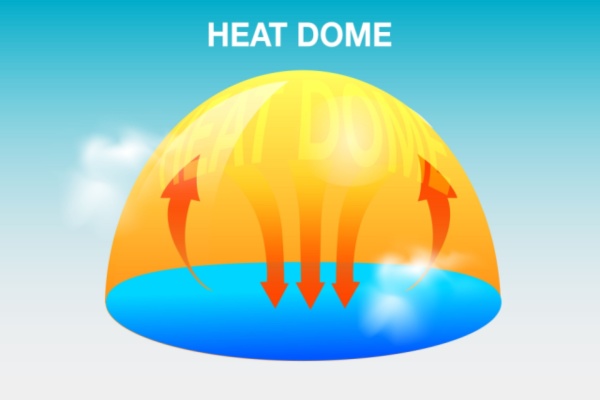
We are a couple of weeks into the Fall season, but instead of sipping Pumpkin Lattes and enjoying “sweatuh weathuh,” most of the western U.S., especially California, is grappling with Extreme Heat Warnings as people suffer under an October heat dome.
As Forbes reports, while many high-temperature records were broken or tied in California over the weekend, temperatures will remain 15- 25 degrees above normal, and likely last through Thursday. Much of southern California is under an Extreme Heat Warning. “Dangerously hot conditions with high temperatures in the upper 90s to 103 and warm nights with low temperatures in the low to mid 70s expected,” stated the National Weather Service in San Diego.
Why is it So Darn Hot?
A heat dome is primarily caused by a high-pressure system that traps warm air in a specific region. The late-season heat dome in California is primarily attributed to a combination of atmospheric conditions and climate change.
Key Factors:
High-Pressure Systems: A persistent high-pressure system has settled over the region, trapping heat and preventing cooler air from moving in. This creates a dome of hot air that can lead to extreme temperatures. “Global model ensembles are in strong agreement that a prolonged and anomalous nearly West-wide autumn heatwave will develop this week and persist for 10+ days,” Swain wrote on his Linkedin page last week. “While some daytime records may be set, this event will be more notable for its persistence and breadth,” He continued.
Santa Ana Winds: The Santa Ana winds are also contributing to the autumn heatwave. The surface weather map gives a clue with the position of high-pressure systems in the West. “Santa Ana Winds occur when air from a region of high pressure over the dry, desert region of the southwestern U.S. flows westward towards low pressure located off the California coast,” explained the NWS website. “This creates dry winds that flow east to west through the mountain passages in Southern California,” It continued. The Santa Ana winds are common from September to May, but this year the timing couldn’t be worse given the magnitude of this ridge of high pressure. These winds often increase wildfire risk too.
Climate Change: Long-term climate trends have contributed to more frequent and intense heatwaves. The background conditions of warming have made such heat domes more likely.
Drought Conditions: Ongoing drought in the region exacerbates the heat by reducing moisture in the soil, which can lead to higher temperatures due to less evaporative cooling.
Is Super El Niño a Bust?
It’s far too early to write off El Nino, so ignore these premature social media posts. “Not only could that not be further from truth, but autumn precipitation in California tells us almost nothing about the winter to come,” Swain wrote. He went on to say, “The effects of even the strongest El Niño events on the North Pacific storm track, and subsequently California precipitation, are not expected to emerge until November *at the earliest,* and possibly not until mid-late December! What concerns me as an atmospheric scientist is that this El Niño is already breaking records, and it is not even close to its peak yet, so I caution people to back off with the false narratives.”
Regardless of Why, When, or Where, Take Heat Seriously
As Forbes reports, people underestimate heat even though it has killed more people in the U.S. over the past three decades than tornadoes, hurricanes, lightning or floods, according to NWS statistics. Just this week, Arizona State University announced the establishment of the nation’s first Center for Heat Preparedness.
That’s a step in the right direction towards elevating public perception of heat and prompting actions that we see when tornadic storms or hurricanes approach. “This August was the hottest month ever reported globally, and extreme heat is the leading cause of weather-related deaths in Phoenix, across Arizona and much of the Southwest,” noted a press release issued by Arizona State University.
There are still several days of this western heatwave to go. Whether you are attending an MLB or NFL game, working, or doing other activities, please treat the Extreme Heat Warnings with the same level of caution that you would for a more telegenic or tangible weather threat like a tornado or atmospheric river.
—
Photo Credit: papa papong / Shutterstock.com
