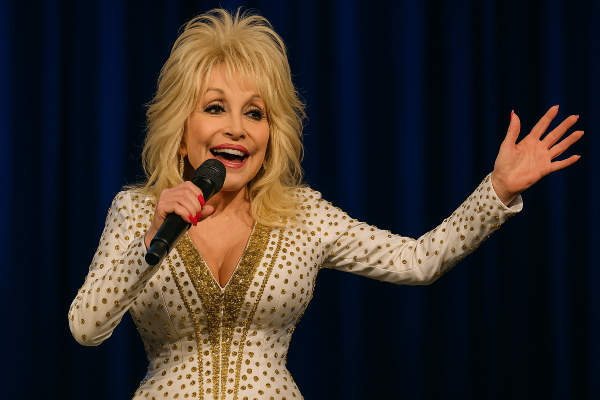
Dolly Parton, the Tennessee-born entertainer who turned country storytelling, rhinestones and an unmistakable voice into one of the most enduring careers in American entertainment, has died at 80.
Over more than six decades, Parton grew from a child singing in church to a global celebrity whose work crossed country music, pop, movies, television, publishing, business and philanthropy. Along the way, she became one of the rare stars recognizable simply by her first name.
Born into a large family in the mountains of East Tennessee, Parton often drew on her childhood for inspiration. Poverty, family, faith and ambition became recurring themes in a catalog that eventually included hundreds of songs.
Her path to Nashville began early. She performed on local television as a child, appeared at the Grand Ole Opry while still a teenager and moved to Nashville after finishing high school.
A major breakthrough came through her partnership with country star Porter Wagoner. Their television appearances and recordings helped introduce Parton to a wider audience, while Wagoner also played a role in advancing her recording career.
Parton soon proved she was more than anyone’s supporting act.
Songs such as “Joshua” and “Coat of Many Colors” established her as a formidable solo performer, but “Jolene” became one of the defining recordings of her career. Its urgent plea and instantly recognizable melody helped push her beyond the country audience and eventually made it one of the most frequently revisited songs in popular music.
Her departure from Wagoner’s television show inspired another career-defining composition, “I Will Always Love You.” The song became a major success for Parton and decades later reached another generation when Whitney Houston recorded it for “The Bodyguard.”
Parton also proved unusually skilled at expanding her career without abandoning the identity that made her famous. Pop crossover hits brought her new listeners, while “9 to 5” turned her into both a movie star and the voice behind one of the era’s best-known workplace anthems.
Her film career included prominent roles in “9 to 5,” “The Best Little Whorehouse in Texas” and “Steel Magnolias.” Television appearances, holiday productions, books and stage projects followed, transforming Parton from a country singer into a fixture of American entertainment.
She was just as recognizable visually. Towering blonde hair, glittering outfits, high heels and an unapologetic love of glamour became part of the Dolly Parton brand. She regularly joked about her appearance, but the humor was part of a carefully controlled public persona developed by a performer who understood the business side of fame exceptionally well.
That instinct extended far beyond the stage.
Parton became a successful entrepreneur whose ventures included Dollywood, the Tennessee theme park that grew into a major tourist attraction and economic force in the region where she was raised.
Her charitable work became another defining chapter.
Parton’s Imagination Library grew from a Tennessee literacy initiative into a program distributing free books to children far beyond her home state. The project was deeply personal. Her father had struggled with reading after leaving school to work, and Parton frequently connected the program’s mission to her own family’s experience.
She also became known for supporting communities affected by disaster, including families harmed by devastating wildfires in the Smoky Mountains.
For all her visibility, Parton often avoided one arena that consumes many celebrities: partisan politics. She repeatedly declined to align herself publicly with political camps, a choice that helped preserve an unusually broad following among people with sharply different views.
Her personal life was comparatively private. She married Carl Dean in the 1960s, and the couple remained together until his death in 2025. Dean rarely appeared in public, even as his wife became one of the most recognizable entertainers in the world.
Recognition followed Parton throughout her career, including major music awards, hall of fame inductions and honors for her humanitarian work.
Yet awards only explain part of her staying power.
Parton combined ambition with humor, commercial instinct with storytelling and extravagant showmanship with an image rooted firmly in East Tennessee. She could fill an arena, carry a movie, build a theme park, write a heartbreaking song and fund a literacy program without any of those identities feeling entirely separate from the others.
For generations of listeners, Dolly Parton was not simply a country star.
She became part of the American cultural landscape.
