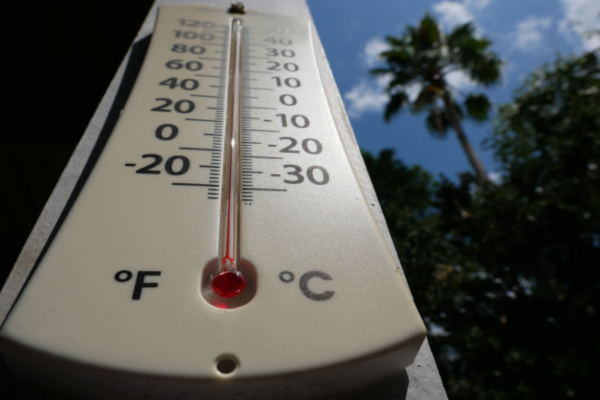
July is typically the warmest month of the year – but this month could be the hottest ever in the United States.
As The Independent reports, temperatures have been above average for 260 million Americans in recent weeks, meteorologist Ben Knoll wrote in a social media post Friday. New York City experienced its hottest day since way back in July of 2012, and Utah’s Salt Lake City saw its hottest day since record-keeping even began 152 years ago.
It’s the “New Normal,” and Super El Niño isn’t Helping
Similarly dangerous heat events fueled by climate change are becoming the “new normal,” Steven Cohen, director of the sustainability management program at Columbia University, told NPR.
This year’s supercharged El Niño climate pattern has also been a factor. El Niño brings warmer and drier weather throughout the northern and central U.S., with wetter and more humid conditions in the South. It’s also helped to form multiple deadly heat domes this July, with more on the way.
What makes Heat Domes so Deadly?
Heat domes are high-pressure systems in the Earth’s atmosphere that trap heat over areas, lasting for days or even weeks.
It’s the length of these phenomena that makes them deadly and domes have been tied to at least 70 deaths in Mississippi, Illinois and other states this summer, according to a tally of local health data from The Washington Post.
New Jersey reported 29 deaths during the first of two oppressive East Coast heat domes on the Fourth of July weekend. The first canceled celebrations and resulted in buckling rail lines.
Heat is the Deadliest Weather Condition in the U.S.
That likely means rising death tolls. Heat is already the deadliest weather condition in the U.S., causing 2,000 deaths each year, Yale research shows. The invisible killer can strain organ function and force the heart to work harder to pump blood.
Increased heat also can mean worsened drought and more of the tinderbox conditions needed to fuel major wildfires that send toxic, cancer-linked smoke hundreds of miles away. That’s already happened in July as well, with air quality becoming hazardous for much of the Great Lakes, Midwest and Northeast.
“Extreme heat and wildfire smoke each carry major risks, especially for people with chronic health conditions including heart disease,” Dr. Manesh Patel, chief of the division of cardiology at Duke University School of Medicine, said in a statement. “The combination of the two is extremely dangerous.”
And the Heat Just Keeps Coming
But the threat is far from over this Summer.
Another heat dome continues baking the Western region and many parts of the Midwest this week, fueling wildfire threats and pushing temperatures near 120 degrees in California and Arizona, according to AccuWeather.
“Temperatures above 100 degrees are common in the deserts during midsummer. However, this strengthening heat dome will push highs 10-20 degrees above the historical average into early August,” AccuWeather senior meteorologist Alex Sosnowski wrote Thursday.
And more frequent and severe life-threatening heat events are expected to hit the U.S. in coming summer seasons, climatologists warn. “We know that heat waves are becoming more intense, they’re lasting longer, they’re covering larger areas than they used to because of human-caused climate change,” Daniel Swain, a climate scientist with University of California Agriculture and Natural Resources, told The Associated Press (AP).
—
Photo Credit: Collective Arcana / Shutterstock.com
