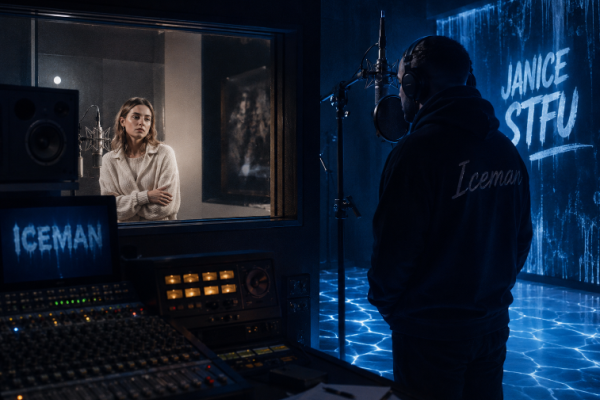
More than a decade after “I Follow Rivers” became a global indie-pop anthem, the song has found new life through one of hip-hop’s biggest names.
Lykke Li is embracing Drake’s decision to interpolate her breakout 2011 hit on “Janice STFU,” a standout track from his latest album Iceman. The Swedish singer revealed that she was caught off guard when the request first came through, admitting she initially assumed it was some kind of joke.
Instead, the unexpected connection turned into another chapter in a creative relationship that stretches back to Drake’s early rise. Longtime fans may remember the pair previously linked up during the So Far Gone era, when Drake sampled Li’s “Little Bit” in 2009. That musical overlap helped establish the emotional, melodic style that would later become one of Drake’s trademarks.
On “Janice STFU,” Drake folds the haunting melody of “I Follow Rivers” into a darker and more confrontational atmosphere. The track has quickly generated conversation across social media and among critics because of its sharp lyrics connected to his ongoing rivalry with Kendrick Lamar.
Li appears fully on board with the reinterpretation. She praised the intensity of the record and described its tone as charged with revenge-driven hip-hop energy, suggesting she appreciates how the song transformed her original material into something entirely different.
Reaction to the track itself has been mixed. Some critics viewed the interpolation as a compelling emotional anchor for the song, while others argued the album leans too heavily on familiar sonic ideas. Fans, however, have largely embraced the nostalgic callback, especially listeners who remember Drake’s early collaborations and genre-blending experiments.
The renewed spotlight on “I Follow Rivers” also highlights the staying power of songs that continue evolving long after their original release. Fifteen years later, the track is no longer just an indie classic. It is now part of another major moment in contemporary rap culture.
For Drake, the move reinforces a pattern that has followed his career from the beginning: borrowing from unexpected corners of music history and reshaping them into something built for the current moment. For Lykke Li, it is proof that a song with emotional resonance never really disappears. It just waits for another artist to pull it back into the spotlight.
