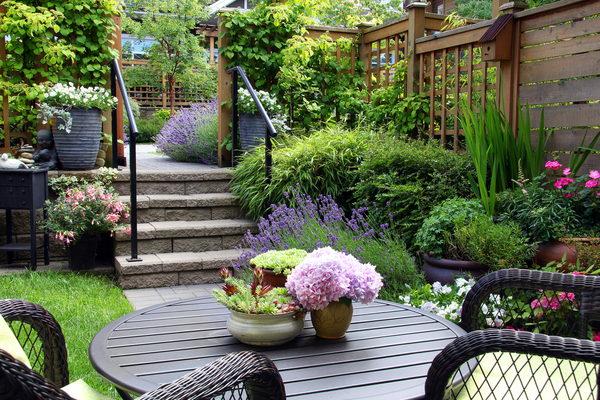
After years of hardscaping taking the lead, we’re seeing a shift back toward planting as the foundation of outdoor design. Increasingly, the approach is to let nature take the lead and to choose native plants that thrive without much maintenance.
Kevin Lenhart, landscape architect and design director at Yardzen says, ““Many homeowners are looking for ways to reduce maintenance without sacrificing how their yard looks or functions. At the same time, most of us feel financially squeezed and are reluctant to pay yard maintenance crews. Groundcovers, native plantings, and meadow-like areas reduce water use while creating richer, more immersive outdoor environments.”
He adds that people are being “Inspired by cottage gardens and more naturalistic landscapes, clients are embracing layered, abundant plant palettes that feel alive and evolving, bringing movement, seasonality, and a sense of fullness to the space. Plants offer a very direct and tangible way for us to connect with nature and the many wellness benefits they bring.”
He says that using native and climate-adaptive plants can bring actual nature to your yard through local and migratory species. Think butterflies, birds, and bees! This is also an extension of those curated “wellness hubs.”
Privacy is always in for backyard spaces, but the rigid, fortress-style privacy has given way to softer, more organic alternatives. “Seclusion can be achieved with a simple fence panel, bamboo screening, or a few well-placed evergreen shrubs,” says Nate Fox of Foxterra Design.
You can easily soften the look of existing fencing with plants—crawling vines on trellises, flowering bushes, and wall planters—along with lighting and organic textures. Even layering in a water feature with a gentle bubbling sound can help drown out exterior noises, adding to the private retreat feel.
—
Photo Credit: Hannamariah / Shutterstock.com
