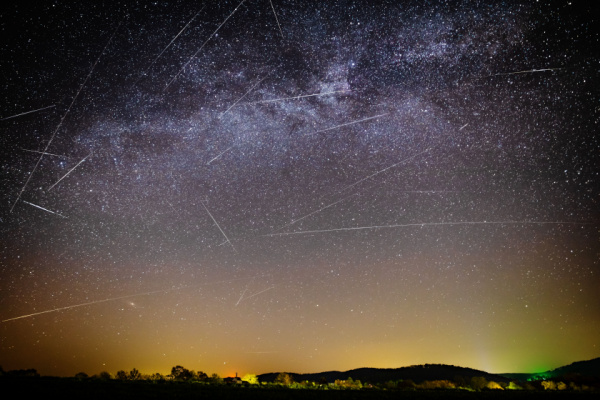
The first meteor shower in over three months is about to peak.
April’s Lyrid meteor shower is the first event of its kind since the Quadrantids peaked in early January. Sporadic meteors have streaked across the sky in the months since, including multiple fireballs over North America, but none have been associated with a major shower.
“The Lyrid meteor shower has the distinction of being among the oldest of known meteor showers. Records of this shower go back for some 2,700 years,” EarthSky explained on its website.
Peak night falls on Tuesday, April 21, into the early morning of Wednesday, April 22, when up to 15 to 20 meteors per hour may be visible.
The moon phase favors this year’s Lyrids, as the peak of the shower coincided with a crescent moon, meaning there will be minimal natural light interference. It will be a stark contrast to the 2027 Lyrids when a nearly full moon will wash out much of the show.
The best viewing times will be during the second half of the night when the shower’s radiant point appears high in the sky. The higher it rises, the more meteors will appear.
While meteors seem to originate near the constellation Lyra, they can flash anywhere across the sky.
The wait for the next shower after the Lyrids will be short. The Eta Aquarids are set to peak on the night of Tuesday, May 5, into the early morning of Wednesday, May 6.
—
Photo Credit: Ingo Bartussek / Shutterstock.com
