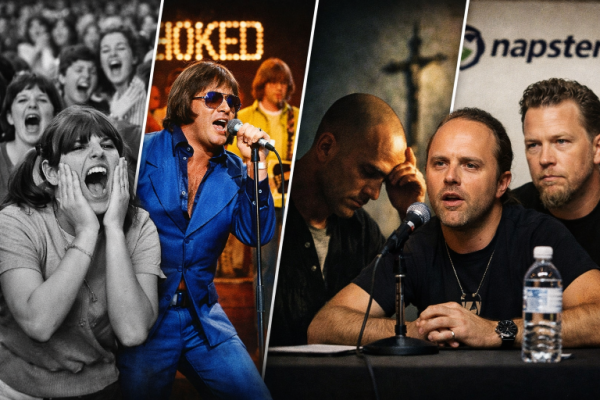
April 13 stands as a revealing snapshot of how music continues to evolve, reflecting shifts in culture, technology, and global influence across decades.
In the early 1960s, the surge of British talent reshaped the global music scene. The Beatles were at the forefront of this movement, dominating charts and captivating audiences with a sound that blended pop sensibility with rock energy. Their success marked a turning point, opening the door for international acts to compete in the American market.
A decade later, the charts welcomed a different kind of international flair. Blue Swede, a Swedish group, achieved a major milestone when their version of “Hooked on a Feeling” climbed to the top spot in the United States. The song’s distinctive arrangement and infectious energy made it a standout hit, highlighting the growing influence of global artists in mainstream pop.
By the early 1990s, the musical landscape had shifted again. R.E.M. brought alternative rock into the spotlight with “Losing My Religion,” a track that defied conventional pop formulas yet resonated widely with listeners. Its success signaled that audiences were ready for more introspective and unconventional sounds, paving the way for a new era in popular music.
The turn of the millennium introduced a different kind of disruption, not in sound but in distribution. Metallica’s legal action against Napster underscored the tension between emerging digital platforms and established industry practices. The case became a defining moment in the conversation around intellectual property and the future of music consumption, raising questions that continue to shape the industry today.
Taken together, these milestones illustrate the dynamic nature of music history. From cultural revolutions to technological challenges, April 13 offers a glimpse into the forces that have continuously redefined how music is created, shared, and experienced.
