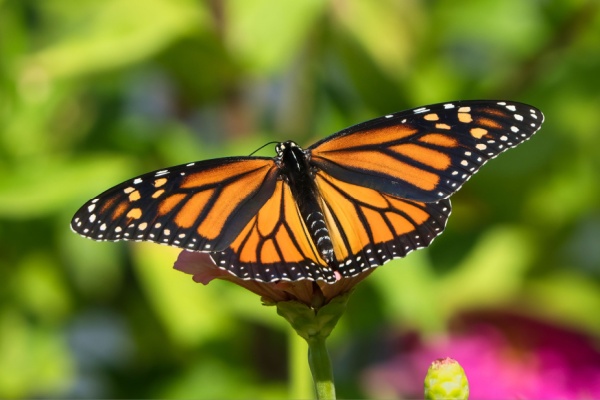
A key monarch butterfly population is showing signs of improvement this year, but scientists warn the species remains in long-term decline—especially in the western United States.
Increase in Eastern Monarch Butterflies wintering in Mexico
As AccuWeather reports, new data released by World Wildlife Fund-Mexico and conservation partners show the eastern monarch population, which overwinters in central Mexico, increased by 64% compared to last winter. Monarchs occupied 7.24 acres of forest during the 2025–26 season, up from 4.42 acres the year before.
The annual survey measures how much forest area the butterflies cover during hibernation, offering a reliable indicator of population trends. While the jump is encouraging, experts say it does not signal a full recovery.
“While an increase is great news, the numbers in Mexico are still well below historic norms,” said Scott Black, director of the Xerces Society for Invertebrate Conservation.
Western Monarchs wintering in California fall to Record Lows
The contrast between the eastern and western Monarch populations is stark.
In coastal California, where western monarchs spend the winter, numbers remain dangerously low. The Xerces Society’s annual Western Monarch Count recorded just 12,260 butterflies in late November, marking the third-lowest total ever observed and a dramatic drop from the millions seen in the 1980s, which scientists consider a stable baseline.
Xerces Society experts say year-to-year swings can draw attention, but the bigger concern is a sustained, long-term decline driven by habitat loss, pesticide use and climate change. Says Black, “With the western monarch population that overwinters in California seeing the third worst year on record, we urgently need better protections for this beloved butterfly.”
The Annual Monarch Migration is Remarkable
Monarchs are known for one of the most remarkable migrations in the natural world. The eastern population travels between Canada and Mexico over multiple generations, while the western population moves between the interior western United States and coastal California.
New technology is now helping scientists better understand that journey. In fall 2025, researchers deployed ultralight “Blu+” transmitters on about 470 monarchs across the eastern and central U.S. to track their migration.
One tagged butterfly, a female known as XSTI009, has already provided a glimpse into the species’ resilience. After overwintering in Mexico, she crossed the Rio Grande into Texas on March 14, 2026, and flew roughly 320 miles in just one day—reaching the eastern edge of the Houston metro area by the following evening.
Monarchs Remain Highly Vulnerable to Extinction
Even with these advances, experts warn monarchs remain highly vulnerable. “With monarch butterfly populations this low, they’re at a much greater risk of extinction if they encounter catastrophic weather events like extreme drought in the Midwest or blizzards at the Mexican overwintering colonies,” said Dr. Ray Moranz, a pollinator conservation specialist with the Xerces Society.
Scientists say recovery will depend on widespread conservation efforts across North America, including planting native milkweed and nectar plants, reducing pesticide use and protecting critical overwintering habitats in both Mexico and California.
Without those efforts, the recent gains in Mexico may prove temporary for one of the continent’s most recognizable species.
—
Photo Credit: Wirestock Creators / Shutterstock.com
