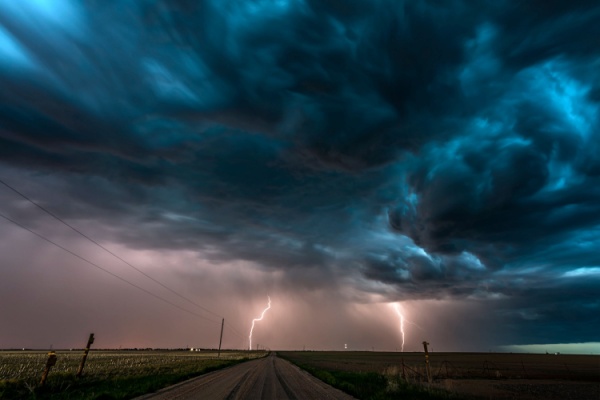
This week, the midwestern region and some parts of the south are on high alert for severe thunderstorms and tornadoes, including nocturnal tornadoes.
Nocturnal Tornadoes are Twice as Deadly
Tornadoes at night are more than twice as likely to be deadly as those during the day, according to a study done at Northern Illinois University. After examining roughly 48,000 tornadoes in the United States from 1950 to 2005, the study led by Walker Ashley from the University’s Geology program, found that roughly one in every 20 overnight tornadoes were killers, compared to roughly one in every 50 daytime tornadoes.
Nocturnal tornadoes only make up about 27% of all tornadoes but are responsible for 39% of tornado deaths and 42% of killer tornadoes in that 55-year period. Some reasons for this are more obvious than others.
The Challenge of Warning Communities about Nighttime Tornadoes
Unless lit by at least somewhat frequent lightning, you may not see a tornado at night. One challenge the meteorological and social science communities face is getting the public to take shelter immediately, without first “confirming the threat” of a tornado by looking outside and wasting precious seconds to reach shelter.
Fewer storm spotters may be willing to take the risk of storm chasing at night, reducing the ability of meteorologists to confirm tornadoes in progress at night. Most people are at home and asleep at night and can be unaware of an approaching tornado threat.
“Nocturnal storm events often come as more of a surprise to people simply because they may not be as in touch with the environment around them as they are during the day, or they may be asleep,” DePodwin said. “That’s why it’s so important to ensure you will be awakened up by weather warnings issued for your location and to know the appropriate action when a warning is issued.”
What You Can Do to Prepare
What can you do to prepare? If you live in one of the affected areas, it’s crucial to have multiple ways to receive tornado warnings, and to prepare ahead of time. Here are some nocturnal tornado preparedness tips from AccuWeather.
Leading up to the event, make sure all cellphones and other weather notification devices, like a NOAA weather radio, are fully charged and that your shelter is stocked with food, water, blankets, pillows, and any items to stay entertained. There’s no telling how long you might be there.
By identifying and properly preparing your safe location prior to when storms begin, you will be ready for what may impact your community and able to properly take action quickly, says Becky DePodwin, a meteorologist and emergency preparedness specialist at AccuWeather.
“Everyone in the household should be aware of where their safe location is, which can be a designated tornado shelter,” DePodwin said. She listed “the basement [in places that are] away from windows, an interior stairwell, or interior bathroom” as the best locations for sheltering during a tornado. Pets should also be included in emergency plans and be brought to a shelter with you when a warning is issued, she added.
Parents should talk with their children about where the safe locations are in the home and practice getting to them quickly so there is no hesitation when a tornado warning is issued.
It’s wise to also have a battery-powered weather radio on hand. In addition, a flashlight, bottled water, closed-toed shoes, and a big puffy blanket are crucial to have during nocturnal severe weather outbreaks. Blankets or even a mattress can be used to shield your body and head from flying debris. A helmet can also offer protection for your head.
Stay aware through the night by turning on weather notifications, along with making sure your weather radio is fully charged or plugged in with the volume turned all the way up. The AccuWeather app, which is available for both Apple and Android phones, provides push notifications for all government weather alerts. A leading independent quality assurance study overwhelmingly concluded that AccuWeather’s app was the first to deliver severe weather push notifications from the National Weather Service (NWS).
—
Photo Credit: Joe Belanger / Shutterstock.com
