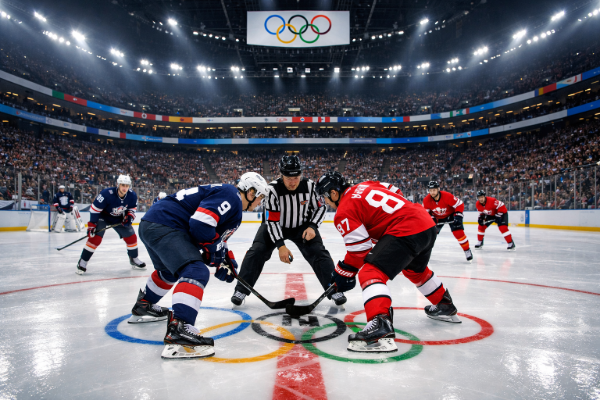
The NHL is back on Olympic ice, and for hockey fans worldwide, it feels like a long-awaited reunion.
After a 12-year absence from the Winter Games, the league’s brightest stars have arrived in Milan-Cortina, bringing with them the kind of global buzz that only elite professional talent can generate. The NHL skipped the 2018 Olympics over concerns about disrupting its season and opted out of 2022 amid pandemic complications. Now, every one of the league’s 32 teams is represented on the Olympic stage, signaling a full-scale return.
The men’s tournament opens with Slovakia facing Finland, while Team USA begins its campaign against Latvia. Anticipation has been building for months, not just because of the talent on display, but because getting here required serious behind-the-scenes work.
Venue concerns loomed large last year as construction delays and questions about ice safety at Milan’s Santagiulia Ice Hockey Arena and the secondary Rho facility raised alarms. At one point, NHL Deputy Commissioner Bill Daly made clear that the league would not risk sending its players if safety standards were compromised.
To address those concerns, the NHL dispatched its own experts to January test events. The verdict brought relief across the hockey world. While the facilities may not be flawless, they were deemed safe and ready for the world’s best players.
Team USA coach Mike Sullivan acknowledged that heavy usage left the ice somewhat worn during early practices, but he stressed that conditions were equal for all teams and expressed excitement about finally competing on Olympic ice.
For the United States, the stakes carry historical weight. The program has not claimed men’s Olympic gold since the iconic 1980 Miracle on Ice. An entire generation of American NHL stars has missed the chance to compete at the Games during the league’s absence, adding urgency to this year’s campaign. Many observers consider Team USA one of the few squads capable of challenging Canada for supremacy.
Canada, however, arrives with its own legacy of dominance. The Canadians captured gold in the last two Winter Olympics that featured NHL players and once again boast a roster stacked with elite talent. Veteran star Sidney Crosby has emphasized the responsibility that comes with wearing the maple leaf, acknowledging both internal and external expectations.
The tournament structure adds another layer of intrigue. Twelve nations are divided into three groups of four and will play a round-robin stage. The three group winners and the top overall runner-up advance directly to the quarterfinals. The remaining eight teams must survive single-game qualification matchups to secure their spots in the knockout bracket. From there, it is win or go home, culminating in the gold medal final on February 22.
For players, fans, and the sport itself, this Olympic return represents more than just another tournament. It marks the restoration of a global showcase that blends national pride with the highest level of professional hockey. After more than a decade away, the NHL’s presence has restored a familiar edge to the Winter Games.
