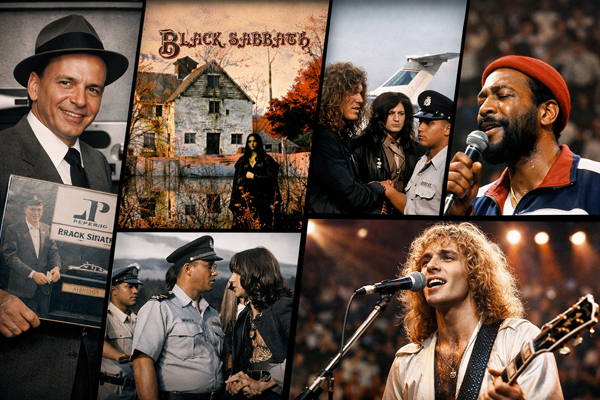
February 13th has seen a colorful cross-section of music history, filled with iconic debuts, strange roadblocks, and soulful tributes.
In 1961, Frank Sinatra took the reins of his career by founding Reprise Records, a move that gave artists greater autonomy in an era of studio dominance. Four years later, Gary Lewis laid down “Count Me In,” which would soon become one of his biggest hits, just as the British Invasion was sweeping the charts.
The Rolling Stones were right in the thick of that invasion when they made another televised splash with a pre-recorded performance on The Ed Sullivan Show in 1966, continuing their rise as transatlantic rock stars.
One of rock’s most thunderous chapters began in 1970 with the U.K. release of Black Sabbath, an album that would become the spiritual forefather of heavy metal. Two years later, the ever-rowdy Led Zeppelin hit an unexpected barrier—not musical, but bureaucratic—when Singaporean officials refused them entry due to their hair length, grounding a planned concert.
On a more celebratory note, February 13, 1976 marked the U.K. release of Frampton Comes Alive!, a live album that captured audiences with its energy and talkbox wizardry, ultimately becoming one of the top-selling live records of all time.
Los Angeles showed its love for soul music in 1978 by declaring “Al Green Day,” recognizing the smooth-voiced singer’s cultural impact. However, the day held more somber notes in 1982, when the gravestone of Lynyrd Skynyrd’s late frontman Ronnie Van Zant was stolen in Florida, only to be found weeks later abandoned in a dry riverbed.
Capping off the day in 1983, Marvin Gaye turned a routine anthem into a masterpiece with his national anthem performance at the NBA All-Star Game, a rendition that remains unforgettable for its artistry and emotion.
