First a rare arctic blast in Florida postponed the launch. Now, issues with the practice launch this week have further delayed NASA’s plan to send four astronauts on a journey around the moon on the Artemis II until all the issues can be resolved.
As NBC News reports, mission managers were conducting an elaborate launch day walkthrough, known as a “wet dress rehearsal,” at Kennedy Space Center in Florida when engineers detected leaking hydrogen at the base of the Space Launch System rocket. NASA was forced to end the test with around 5 minutes and 15 seconds remaining in the simulated launch countdown.
Mission is Delayed until March at the Earliest
Shortly after 2 a.m. ET on Tuesday, NASA announced that it would forgo February’s launch window (which lasted until Feb. 11) for the Artemis II mission around the moon to allow teams to review data and conduct another wet dress rehearsal. The agency said it will aim for March “as the earliest possible launch opportunity.”
NASA has said launch opportunities are available from March 6 through March 9 and on March 11, with additional dates in April, if needed.
“To me, the big takeaway was we got a chance for the rocket to talk to us, and it did just that,” John Honeycutt, the Artemis II mission management team chair, said Tuesday afternoon in a news briefing discussing the wet dress rehearsal. He added that the elaborate practice run is designed to put the rocket and team through their paces “before we ask our crew to go fly on launch day.”
Why a Dress Rehearsal?
NASA’s wet dress rehearsals are a standard part of its process and allow mission managers to assess the performance and readiness of a rocket. That is especially important in this case, since the agency’s Space Launch System (SLS) booster and Orion spacecraft have never launched with astronauts onboard and haven’t flown since late 2022.
“With more than three years between SLS launches, we fully anticipated encountering challenges,” NASA Administrator Jared Isaacman wrote in a post on X. “That is precisely why we conduct a wet dress rehearsal. These tests are designed to surface issues before flight and set up launch day with the highest probability of success.”
The lengthy rehearsal, which took several hours, involved filling the rocket with more than 700,000 gallons of cryogenic propellant and simulating each step of the launch countdown as would occur on the actual day.
What Went Wrong?
During the fueling process, which got underway around 12:30 p.m. ET on Monday, mission managers twice paused proceedings to investigate leaking hydrogen fuel at the tail end of the rocket. Super-chilled liquid hydrogen and liquid oxygen are common propellants for rockets, but because hydrogen molecules are so tiny, they can be tricky to contain and are notoriously prone to leaking.
“When you’re dealing with hydrogen, it’s a small molecule, it’s highly energetic,” Honeycutt said. “We like it for that reason. And we do the best we can.” Hydrogen leaks cropped up again in the final minutes of the simulated launch countdown. Systems on the rocket that are designed to take over control of the booster in the final minutes before liftoff “automatically stopped the countdown due to a spike in the liquid hydrogen leak rate,” NASA said.
In the days ahead, engineers will also investigate several audio issues in communications channels used by ground teams that occurred during the wet dress rehearsal, NASA said. “We’ll figure it out, and we’ll be back here talking to you once again about when we’re going to target our next wet dress and the results from that,” Artemis launch director Charlie Blackwell-Thompson said in the briefing.
What’s Next?
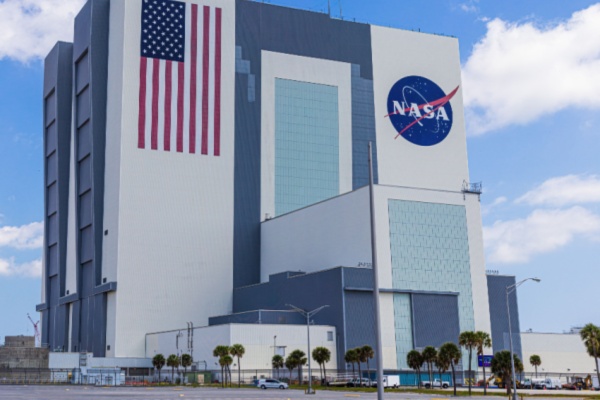
Lori Glaze, acting associate administrator for NASA’s Exploration Systems Development Mission Directorate, said teams need to analyze the full results of the wet dress rehearsal before another practice run can be scheduled. So far, work is proceeding at the launch pad, she said. If more extensive repairs are needed, NASA could roll the rocket back to the Vehicle Assembly Building, which would likely result in further delays.
The four astronauts set to fly on the Artemis II flight — NASA astronauts Reid Wiseman, Christina Koch and Victor Glover and Canadian astronaut Jeremy Hansen — had been in quarantine in Houston since Jan. 21 to protect against preflight exposure to germs. They were expected to arrive at Kennedy Space Center on Tuesday afternoon. Instead, NASA confirmed Tuesday that the astronauts have been released from quarantine and will remain in Houston.
In a statement on X, Wiseman said he and his fellow crew members had breakfast with their families and will resume training on Wednesday. “Immense pride seeing the rocket reach 100% fuel load last night, especially knowing how challenging the scenario was for our launch team doing the dangerous and unforgiving work,” he wrote.
The crew is expected to enter quarantine again roughly two weeks before the next targeted launch opportunity.
—
Photo Credit: Framalicious / Shutterstock.com
