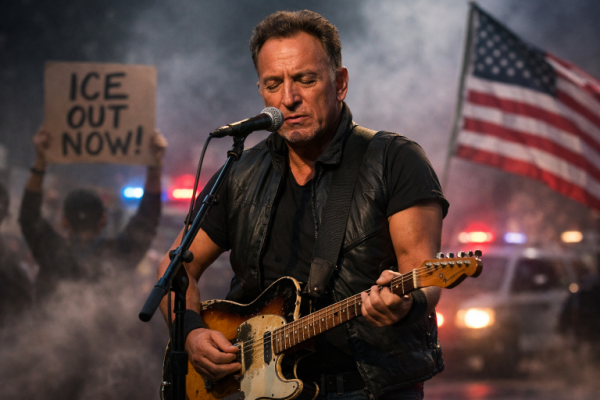
Bruce Springsteen has released a powerful new protest song, “Streets of Minneapolis,” directly responding to recent controversial events in Minneapolis involving federal immigration enforcement and community protests. The track was released on January 28, 2026, just days after two Minneapolis residents, Alex Pretti and Renee Good, were fatally shot in separate encounters with federal agents during a controversial immigration operation.
Springsteen wrote and recorded the song in a remarkably short time, explaining in a social media statement that he composed it on January 24 and recorded it on January 27 before releasing it the next day. He said the song was his response to what he called the “state terror being visited on the city of Minneapolis” and dedicated it to the city’s residents, immigrant neighbors, and the memories of Pretti and Good.
Musically, “Streets of Minneapolis” blends traditional rock and folk influences with a full band and communal vocal elements, echoing historical protest songs. Lyrically, Springsteen does not hold back. He criticizes the actions of federal agencies and political leaders, using vivid imagery and direct references. The song portrays Minneapolis as a city resisting aggressive federal presence and echoes chants heard during recent protests, including calls for “ICE out now!” as a chorus.
The lyrics also address broader political themes, challenging the official narratives offered by government officials about the shootings and invoking solidarity with those who have taken to the streets against the enforcement actions. In doing so, Springsteen situates himself in a long tradition of musicians who use their art to confront social and political issues.
The release has drawn attention not only from music fans but from broader cultural and political commentators who note its sharp critique of current immigration policies and its memorialization of individuals caught in the crossfire of enforcement operations. While the song’s direct impact on policy remains uncertain, it has become a focal point for discussion around art, activism, and accountability.
