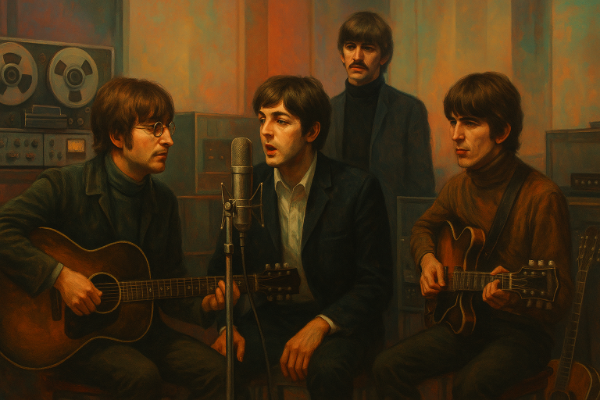
Sixty years ago, The Beatles did more than release another chart-topper—they reinvented themselves, and arguably modern music itself. On December 3, 1965, Rubber Soul hit shelves in the UK, followed by its US release three days later. While previous Beatles albums delivered hit singles by the handful, this sixth studio effort arrived as a cohesive artistic statement—an album in the truest sense.
Gone were the mop-top harmonies built strictly for teenage frenzy. In their place came textured vocals, introspective lyrics, and a genre-blurring palette that pulled from folk, soul, pop, and early psychedelia. George Harrison’s sitar on “Norwegian Wood” and the fuzzed-out basslines elsewhere signaled a new sonic boldness. John, Paul, George, and Ringo were no longer just performers—they were now composers, producers, and sonic architects.
What made Rubber Soul revolutionary wasn’t just its sound, but its intent. For the first time, The Beatles stepped away from the distractions of touring and film, locking into studio sessions with unprecedented focus. That freedom yielded twelve tracks that flowed like a novel rather than a mixtape.
Commercial success followed swiftly: the album topped the UK charts for nine weeks and moved over a million copies in just over a week in the United States. But its true triumph came later, as its influence rippled outward. From The Beach Boys’ Pet Sounds to Radiohead’s OK Computer, Rubber Soul set the blueprint for what a rock album could aspire to be.
Sixty years on, its resonance hasn’t dulled. Whether you’re drawn in by the aching simplicity of “Michelle” or the wry self-awareness of “Nowhere Man,” the album still speaks to modern listeners with clarity and confidence. Rubber Soul didn’t just mark The Beatles’ evolution—it marked a pivot point for music itself.
