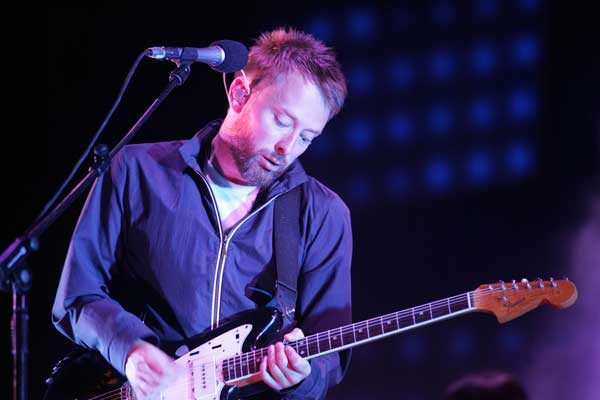
The once‑unstoppable momentum of Radiohead has encountered a subtle but significant upheaval. Long celebrated as the voice of alienation, the anxieties of modern life and the future’s ghost‑echoes, the Oxford quintet now find themselves in a novel limbo: touring as a “greatest‑hits” act whose prophetic relevance seems to have caught up with—and maybe overtaken—them.
For decades, Radiohead carved out a space where widespread disquiet found an outlet. With albums like The Bends, OK Computer and Kid A they captured generational restlessness and futuristic dread. Their approach felt ahead of its time, their sonic experiments and lyrical obsessions pushing far beyond conventional rock’s comfort zone.
But we have now arrived in the future they once envisioned. Surveillance, war, alienation—all familiar themes in their work—are no longer metaphorical speculations, they are lived realities. As the article observes, Radiohead now “appear curiously out of sync” despite having once reflected the zeitgeist so precisely.
A deeper problem emerges when the band’s political dimension comes into sharper relief. Thom Yorke’s solo show being interrupted by protestors, the band members’ conflicting stances on Israel/Gaza, the cancellations of UK concerts under pressure from boycott campaigns—these all feed into a narrative the article frames as one of internal strain and external disapproval. When a band builds part of its identity on cultural critique, stepping into explicit political stances invites intensified scrutiny.
The point at which this transformation became critical, the article suggests, was around their 2003 album Hail to the Thief. Up to that point, their political commentary was layered, ambiguous, lyrical; thereafter it became more blunt, more declarative, opening “Pandora’s box” of expectations and responsibilities. The article argues that once you make a political platform part of your identity, retirement isn’t possible: you must always engage, always respond—or risk being judged complicit in your silence.
What emerges is a crisis of meaning for a band whose very identity rested on reflecting disaffection. If the world they predicted has arrived, what remains for them to say? If their music was once the mirror, now the cracks show. The article reckons their challenge is internal as much as external: their position is not simply about their output but about the shifting cultural landscape they inhabit.
Yet it is not entirely a tale of decline. The piece pays tribute where due: there are still moments in Radiohead’s catalogue that transcend politics, that deliver something purer, more timeless: tracks like “How to Disappear Completely”, “Daydreaming”, “Reckoner” stand outside of context and deliver emotional truth. These are the moments listeners remember, when the band ceased being prophets and simply became conduits for collective emotion.
In the end, Radiohead’s impasse may not be a failure—it may be the natural consequence of playing a long‑game in which the world eventually catches up to the music. When destination arrives, you must decide whether to continue the journey or chart a new path. For Radiohead, the question now is not just what comes next, but whether the next step can still surprise us.
—
Photo Credit: Northfoto / Shutterstock.com
