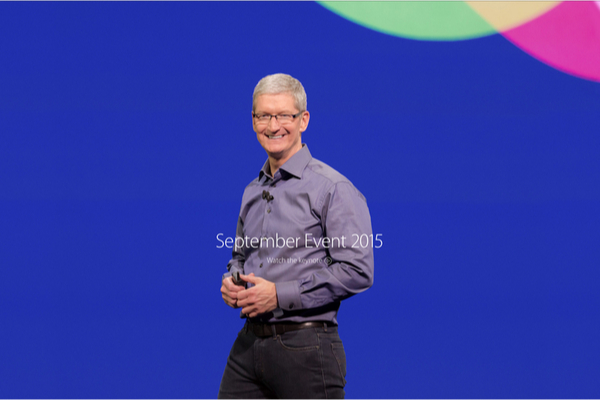
Apple’s “Awe Dropping” event has wrapped—and the focus of Tuesday’s show was mobile devices: the iPhone, the Watch, and AirPods.
As Fortune reports, in total, Apple unveiled eight new products, including a brand-new member of the iPhone family, the iPhone Air.
Here’s a look at everything that was announced, in order of when it was announced during the show.
AirPods Pro 3
According to Fortune, Apple redesigned AirPods Pro so they’re smaller and match more ears; Apple calls them the best-fitting AirPods ever. Apple also improved the audio with a wider soundstage and, more importantly, better active noise cancellation. Advanced computational audio, and new ear tips, offer better noise isolation—twice the ANC compared to the previous generation, and the best ANC in any wireless in-ear headphones, Apple promises, calling it over-the-ear performance in a pocket-sized design.
Apple AirPods Pro 3 also supports live translation, so it can help you understand audio in your preferred language, say, if you’re wandering around a foreign country. ANC lowers the volume of the person speaking so it’s easier to focus on the translation. And it doesn’t just translate individual words, but complete phrases, so you can just speak naturally. Your phone will translate your words into their spoken language, if needed—and Apple says live language translation is even more powerful if both users are wearing AirPods Pro 3.
AirPods Pro 3 also has a heart-rate sensor built-in. Thanks to the Apple Heart and Movement Study, which had over 250,000 participants, you can track up to 50 different workout types using just your headphones; no Watch necessary. You can track calories burned, and heart rate, using just your headphones and your phone’s Fitness app.
Apple also promises more battery life: 8 hours on a single charge, up from 6. And, in transparency mode, when used as a hearing aid, AirPods Pro 3 can support up to 10 hours of battery life.
Apple Watch Series 11
Apple calls the Series 11 the most durable scratch-resistant Watch ever. It has more 5G coverage, is more battery-efficient, and comes with WatchOS 26 and the Liquid Glass design overhaul that comes with it. Series 11 also comes with new health features, including Health, Hearing, Cycle Tracking, Mental Health, and more.
The Apple Watch Series 11 is attacking hypertension, also known as high blood pressure. Using data from the optical heart sensor, the Watch looks for high blood pressure over 30-day periods and will alert you if it spots patterns of hypertension. It won’t detect all instances, but Apple expects to notify over 1 million people of hypertension in the next year. It’ll be available in 150 regions this month, including the U.S. and Europe.
Fortune reports that the Apple Watch Series 11 will also help you understand the quality of your sleep, thanks to a new Sleep Score feature. It can tell you about how long you slept, how it compares against your average, and measure any interruptions.
Notably, the Apple Watch Series 11 has improved battery life: up to 24 hours. It comes in four colors: black, silver, gold, and space gray. There are new band colors and styles from Apple and Nike, and a new Hermes knit band with a special watch face that plays cute little animations. Apple Watch Series 11 starts at $399.
Apple also debuted a new Watch SE, called SE 3, which is the entry-level Watch the company sells. It comes with an always-on display for the first time, supports gestures so you can control the Watch with just one hand, offers wrist-temperature sensing (for women’s health in particular), and can play music through side speakers. It also supports fast charging for the first time, which means it’ll charge twice as fast as the last SE: 15 minutes of charging will give you 8 hours of life. It starts at $249.
Apple Watch Ultra 3
Apple’s highest-end Watch has an improved display that’s brighter when viewed at an angle, and thinner borders so you have a bigger screen without Apple needing to change the case size, making for the biggest Apple Watch display ever. It comes with better 5G support, but also satellite connectivity, so you can get emergency help you need, or send messages or share your location, even in remote areas. Apple doubled the signal strength so you can communicate with satellites 800 miles above Earth.
Ultra 3 also comes with a larger battery that offers up to 42 hours of life. It comes in black and natural titanium colors, has new bands, and a rubber series of bands from Hermes. Apple Watch Ultra starts at $799.
iPhone 17
The iPhone 17 now features a 120 Hz ProMotion display, a feature previously reserved for the Pro iPhone models, which makes actions look and feel smooth. It also features an always-on display, and is the brightest screen ever and has less glare thanks to a 7-layer anti-reflective coating. It comes in five colors: white, black, green, purple, and blue. It also has the best scratch resistance in an iPhone.
iPhone 17 is powered by an A19 chip, made with 3-nanometer technology, plus an improved neural engine for Apple Intelligence and higher memory bandwidth to make large language models run faster. It also has improved fast charging, so just 20 minutes of charge will give you 8 hours of video time.
The iPhone 17 features a rear dual-camera system on the back. The ultra-wide camera now has a 48-megapixel lens, four times the resolution compared to the previous ultra-wide lens on the iPhone 16. On the front, Apple introduces Center Stage for its selfie camera with a sensor that’s almost twice the size of the previous iPhone 16 front-facing cam, allowing for high-resolution photos and videos in any orientation so you don’t need to rotate your iPhone to take a landscape selfie anymore. You can just tap your screen to go from landscape to portrait—and when it sees a lot of subjects on your screen, it automatically adjusts the camera to accommodate everyone.
The iPhone 17 starts with 256 GB of storage on board. It starts at $799.
iPhone Air
As Fortune reports, the iPhone Air is officially Apple’s thinnest iPhone ever, and at just 5.6 millimeters thick, it’s slimmer than the company’s ultra-thin M4 iPad Pro. It has 3 times the scratch resistance as the previous glass Apple would use for iPhones, and is made out of recycled titanium. It comes in black, white, gold, and blue. The inside was precision-milled to make room for all of the necessary chips and sensors.
The iPhone Air is powered by the A19 Pro chip, which Apple says is the fastest CPU in any smartphone. It’s also highly energy efficient compared to the A19 chip that powers the iPhone 17. A new 5-core GPU most notably helps power AI thanks to neural accelerators into each GPU core. Apple calls it MacBook Pro levels of compute, in an iPhone, which it says is perfect for AI workflows.
The iPhone Air also gets a new chip called N1, an Apple-designed chip that works for WiFi 7, Bluetooth 6, and Thread, which helps improve Personal Hotspot and AirDrop features. It also has a C1X chip, a much faster modem than the previous C1 chip.
The ultra-thin profile of the iPhone Air requires significant engineering concessions. Most notably, the device features a single 48-megapixel “Fusion” camera system, which includes both a main camera and telephoto lens all housed in a horizontal camera bar across the top of the device—a departure from Apple’s traditional corner-mounted camera systems. The design eliminates both telephoto and ultrawide cameras, focusing solely on the Fusion camera. Apple says the Fusion camera excels in low light. On the front, Apple gives the iPhone Air the new Center Stage camera that’s going on the iPhone 17, so you can take photos in any orientation without needing to physically rotate your phone. And now, you can film videos using both the front and rear cameras at the same time so you can film your reaction to watching a sporting event, for example.
The iPhone Air features eSIM, so you no longer need to port a physical SIM card—but really, this is about Apple making the most use of the space of the phone, as the company said during its event. eSIM coverage is available globally—and iPhone Air is eSIM only.
In terms of battery, you can expect to get “all-day life,” according to Apple, thanks to battery-saving features in iOS 26. There’s also a new low-profile MagSafe battery that attaches to the back of the iPhone magnetically; with that battery, Apple says you can get 40 hours of battery life.
Apple designed two custom cases for the iPhone Air: one case that’s 1mm thin, and one made of a soft polycarbonate. There’s also a magnetic strap that can hold onto your phone so you can wear it like a bag.
The iPhone Air also sports a 6.6-inch OLED display with 120Hz ProMotion technology, bringing premium display features previously reserved for Pro models to a broader audience for the first time. Apple has integrated its new A19 chip and 12GB of RAM, ensuring the Air delivers flagship-level performance despite its constrained form factor.
The iPhone Air represents Apple’s response to increasing competition in ultra-thin premium devices, particularly from Samsung’s Galaxy S25 Edge. By creating an entirely new product category within its lineup, Apple aims to capture consumers prioritizing aesthetics and portability over maximum functionality. It starts at $999.
iPhone 17 Pro and Pro Max
The 6.3-inch iPhone 17 Pro and 6.9-inch Pro Max is all about power. Apple used aerospace-grade aluminum alloy, for improved thermal conductivity, which also makes the phone significantly lighter to hold. It comes in silver, deep blue, and “cosmic orange.” Improved thermals also makes room for a bigger battery and better antenna system. Everything is done to unlock the potential of the A19 Pro, which is specially built for AI workloads. It has 40% better sustained performance than iPhone 16 Pro, according to Apple.
Apple is now using ceramic shield, instead of glass, for the back, which is four times more resistant to cracks and allows for a thinner profile, which, again, allows room for a bigger battery. A 7-layer antireflective coating also makes the phone better in bright lighting conditions.
Okay, so about that battery. It has the best life in any iPhone. For eSIM-only models, the battery is even bigger, giving you an additional 2 hours of additional video playback per charge, giving you 39 total hours of video playback.
The iPhone 17 Pro camera system is highly versatile: It features a sensor that’s 56% larger than the previous generation, which allows for more light and detail in photos. Thanks to its 8X telephoto lens, Apple uses machine learning to preserve natural details, reduce noise, and result in significantly improved color accuracy, especially in low light. Apple is also adding support for ProRes RAW capture, the industry-leading Apple video codec that captures all the information from the camera sensor for post-production, ensuring control and quality. Apple said its entire presentation was actually shot with an iPhone 17 Pro camera. It also supports some nifty features like Genlock, which allows you to use multiple cameras to shoot motion at the same time so you can capture cool bullet-time effects.
A new TechWoven case is available for the iPhone 17 Pro, as well as clear cases and colors in silicone. Yes, it also comes with a new body strap in case you want to wear your phone.
The iPhone 17 Pro starts at $1,099, and the Pro Max starts at $1,199.
Apple’s Strategy to Combat Industry Pressures
These product announcements come as Apple faces a ton of pressure from AI-hungry analysts, who aren’t thrilled with the pace at which Apple is bolstering its Apple Intelligence offering.
Apple’s strategy appears centered on hardware innovation bridging the gap until AI capabilities mature in 2026. But this approach carries inherent risks: if these products fail to drive expected upgrade cycles, the company could face continued underperformance relative to its AI-obsessed peers in Silicon Valley, many of whom are advancing their strategies and technologies more aggressively than Apple. Meta, OpenAI, Microsoft and others are pouring billions into AI facilities, and talent—and soon, hardware. Success for Apple would depend on whether consumers will accept higher prices for incremental improvements while Apple develops its next generation of software capabilities.
—
Photo Credit: PriceM / Shutterstock.com
