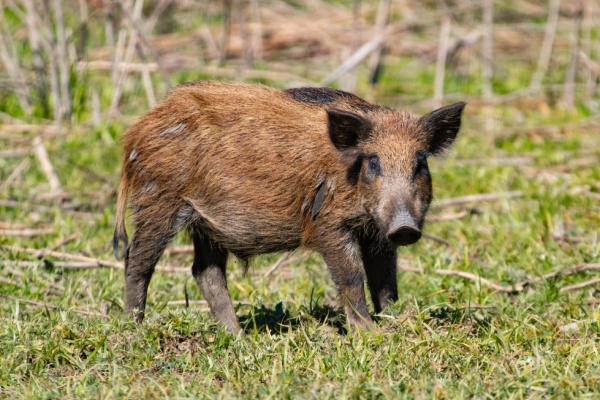
Dan Burton heard of pigs with electric blue meat in California years ago from an old-timer he used to hunt with, but he’d brushed it off as urban legend. So when he cut open a dead wild “feral” pig in Monterey County, California, this past February, he was surprised to see blue fat— vivid, “7/11 slushie” blue—beneath the skin.
As National Geographic reports, the color came from the blue dye of rodent poison, he correctly suspected, specifically from anticoagulant rodenticide bait containing the chemical diphacinone. He tipped off the California Department of Fish and Wildlife, which confirmed the presence of diphacinone and sounded the alarm to local hunters.
It wasn’t the first time.
Diphacinone is a restricted chemical in California, meant to be used only in specific circumstances for infestation control. The state tightly regulates anticoagulant rodenticides, but it doesn’t enforce a total ban. So it still shows up where it’s not supposed to be: in the bodies of many of California’s iconic animals, including condors, black bears, bobcats, and in the somewhat less beloved feral pigs.
Burton, who owns Urban Trapping Wildlife Control, was hired in late February to deal with wild pigs encroaching on an 800-acre ranch along the Salinas river. On multiple late-night stakeouts, he watched thick-furred pigs trot up from the banks of the Salinas to the ranch’s fence, snuffling for the ground squirrel bait stations affixed there—and the diphacinone-laced oats within.
The hard plastic bait containers were standard-issue and secure, but a California feral pig can weigh up to 200 pounds and makes “a worthy opponent,” said Burton. The pigs easily broke up the containers and scarfed up the blue pellets.
Months after Burton sent the California DFW a meat sample for lab testing in March, the agency posted a statement on July 30 warning local hunters to “use caution when harvesting game animals and be aware of potential risks.”
No other blue-tinged animals have been reported in Monterey County since March, said Krysten Kellum, Information Officer at the California Department of Fish and Wildlife, in an email. But the department has seen these reports before. A California feral pig made headlines a decade ago for its bizarre, cobalt-colored fat. And California hunters were warned of diphacinone contamination in 2021, after a flock of geese with blue innards were found in the San Francisco Bay area.
Diphacinone-laced rodent poisons won’t always turn animals brilliant blue, however, making it hard for hunters to identify contamination. The strength of color depends on how much dyed bait the animal eats.
In large doses, diphacinone causes severe bleeding in humans and other mammals that can eventually be fatal. There isn’t a lot of science to detail how much game meat, and at what level of contamination, a person can eat before getting sick. One study from 2011 found that cooking it would not make it safe.
—
Photo Credit: ROBERT ENRIQUEZ / Shutterstock.com
