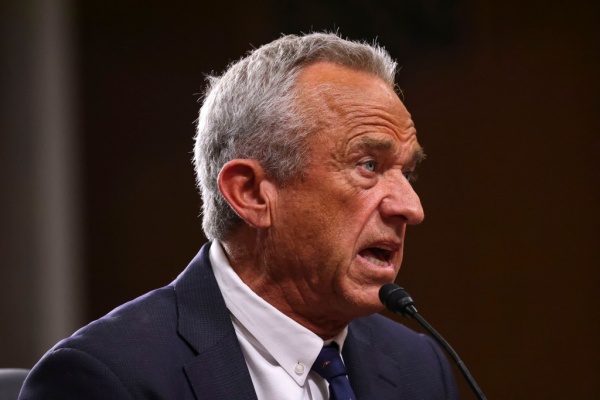
Health and Human Services Secretary Robert F. Kennedy Jr. announced on Monday he is removing all 17 sitting members of the Centers for Disease Control and Prevention’s (CDC) vaccine advisory committee and replacing them with new members. The Advisory Committee for Immunization Practices (ACIP) makes recommendations on the safety, efficacy and clinical need of vaccines.
Making a Clean Sweep “to re-establish public confidence”
As Reuters reports, Kennedy’s dismissal of an entire independent panel of experts citing the goal of restoring trust in vaccines could undermine confidence in those available now, putting Americans at risk of preventable infectious diseases, public health experts and others said on Monday.
Kennedy, a longtime vaccine skeptic, said in a commentary published in the Wall Street Journal that he was firing all members of the Advisory Committee for Immunization Practices (ACIP) at the Centers for Disease Control and Prevention “to re-establish public confidence in vaccine science.” In a press release, HHS said the Biden administration appointed all 17 sitting ACIP members, with 13 of those appointments occurring in 2024.
“Today we are prioritizing the restoration of public trust above any specific pro- or anti-vaccine agenda,” Kennedy said in a statement. “The public must know that unbiased science — evaluated through a transparent process and insulated from conflicts of interest — guides the recommendations of our health agencies. A clean sweep is necessary to reestablish public confidence in vaccine science,” Kennedy’s statement continued. “ACIP new members will prioritize public health and evidence-based medicine. The Committee will no longer function as a rubber stamp for industry profit-taking agendas.”
Medical Professionals Express Concern “human lives lost here because of this”
“I fear that there will be human lives lost here because of this,” said Dr. Sean O’Leary, chair of the American Academy of Pediatrics’ Committee on Infectious Diseases. “It is a special kind of irony that he is saying he is doing this to restore trust, given that he is, as an individual, more responsible for sowing distrust in vaccines than almost anyone I can name,” O’Leary said.
O’Leary said pediatricians have already been fielding calls from parents who are confused about conflicting announcements earlier this month narrowing the use of COVID-19 vaccines for healthy children and pregnant women. “This is only going to add to that,” he said.
Dr. Paul Offit, a pediatrician specializing in infectious diseases at the Children’s Hospital of Philadelphia and a member of the FDA’s independent panel of vaccine advisers, told ABC News he thought the decision Monday was extremely dangerous. Kennedy “doesn’t have a single example to show where a vote by one of these committees has hurt children,” Offit said. “In fact, the opposite is true — the votes by this committee over the last 25 years have caused children to suffer less and die less. ACIP should be given awards, not fired.”
“For generations, the Advisory Committee on Immunization Practices (ACIP) has been a trusted national source of science- and data-driven advice and guidance on the use of vaccines to prevent and control disease … Today’s action to remove the 17 sitting members of ACIP undermines that trust and upends a transparent process that has saved countless lives,” said Dr. Bruce A. Scott, president of the American Medical Association, in a statement. “With an ongoing measles outbreak and routine child vaccination rates declining, this move will further fuel the spread of vaccine-preventable illnesses.”
180 Reversal of his Confirmation Testimony
Kennedy had previously claimed he would not touch ACIP. In February Sen. Bill Cassidy, a Republican from Louisiana, who said he had initially struggled with Kennedy’s nomination for HHS secretary before voting to confirm him, said Kennedy had promised him no changes would be made to ACIP.
“He has also committed that he would work within the current vaccine approval and safety monitoring system and not establish parallel systems,” Cassidy said at the time in a speech on the Senate floor. “If confirmed, he will maintain the Centers for Disease Control and Prevention’s Advisory Committee on Immunization Practices without changes.”
In a post on X after the changes were announced Monday, Cassidy said there is a fear the ACIP “will be filled up with people who know nothing about vaccines except suspicion. I’ve just spoken with Secretary Kennedy, and I’ll continue to talk with him to ensure this is not the case.”
Restore Confidence in Vaccines, or Eliminate Them?
The firing of the entire vaccine advisory committee comes just weeks before a scheduled public meeting in which advisers were expected to weigh in and vote on a number of decisions, including the 2025-26 COVID-19 vaccine boosters.
The health agency said the committee will meet as scheduled on June 25-27, but it is unclear who would serve on that panel or how they have been vetted for conflicts of interest. The agency said it would replace them with new members currently under consideration. Fired ACIP member Noel Brewer, a professor of public health at the University of North Carolina, said it took about 18 months from the time he applied until he was serving as an ACIP member.
Former CDC Director Dr. Thomas Frieden called out Kennedy’s “false claims” in the Wall Street Journal piece, saying the panel was rife with conflicts of interest. Most of the panel was appointed last year, the CDC website shows. “Make no mistake: Politicizing the ACIP as Secretary Kennedy is doing will undermine public trust under the guise of improving it.”
In fact, members ACIP have at times recommended a narrower use of a vaccine than what was technically allowed by authorization from the Food and Drug Administration (FDA).
How this Affects your Insurance Coverage
These firings could also affect your bottom line. After Kennedy announced that he was removing the Covid-19 vaccine from the CDC’s recommended immunization schedule, a list that’s tied to what various private insurers and Medicaid expansion programs are required to cover with no cost-sharing, sparked concern as Insurance companies could use this as an excuse to stop vaccine coverage.
The change will likely curtail access to the Covid-19 vaccine for children and pregnant women if health plans drop coverage or increase cost-sharing after no longer being required to pay for the shots. That move would not only leave patients to start paying out of pocket for the vaccines, but place insurers in a tough spot with beneficiaries who are vulnerable to the virus or seeking to prevent it.
“Insurance companies are going to raise the claim they don’t have to cover it,” said James Hodge, a health law professor at Arizona State University. “That’s problematic because there’s a lot of people that may have been relying on it to avoid Covid.”
—
Photo Credit: Joshua Sukoff / Shutterstock.com
