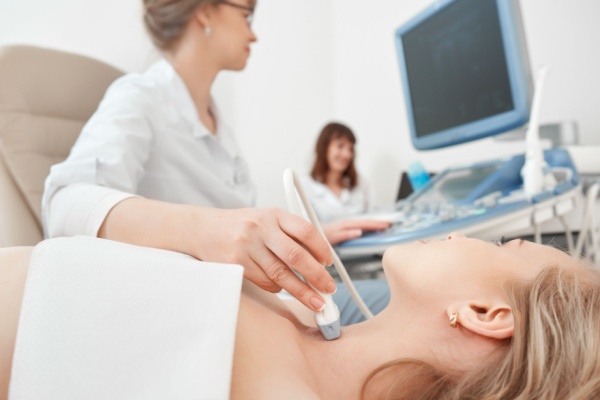
January is Thyroid Awareness Month. The American Thyroid Association states that approximately 20 million Americans have some form of thyroid cancer, so it is important to discuss because 60% of people who have some form of thyroid disease remain unaware of their condition.
What is the Thyroid and what is its Function?
According to the Pacific Neuroscience Institute, the thyroid gland is a butterfly-shaped endocrine gland located in the lower front of the neck. The role of the thyroid is to make thyroid hormones. These hormones are secreted into the blood and then carried throughout the body. The thyroid controls the body’s metabolism, increases heart rate, and affects how fast things move through the body such as food, bone loss, and sugar, and many medical experts deem it to be the most important endocrine organ!
Thyroid Awareness Month facts:
In honor of Thyroid Awareness Month, here are few quick facts of about thyroid disorders.
- Women are 5-8 times more likely than men to experience thyroid problems.
- 1 in 8 women will develop a thyroid disorder in her lifetime.
- The cause of thyroid problems is largely unknown.
- Cardiovascular diseases, osteoporosis and infertility are serious conditions that can occur if thyroid disease goes undiagnosed.
- It is important for pregnant women to be diagnosed and treated adequately. If not, risks include miscarriage, preterm delivery and severe developmental problems in their children.
- Most thyroid diseases are life-long and can be managed with proper medical attention.
- Thyroid nodules are very common and are present in 60-70% of middle-aged women.
- Most thyroid cancers respond to treatment, but a small percentage can be very aggressive.
Early Warning Signs of Thyroid Problems
- Overactive thyroid: Racing heart rate, Palpitations, Anxiety, Insomnia, Nervousness, Weight loss with increased appetite, Excessive sweating/heat intolerance, Muscle weakness.
- Underactive thyroid: Fatigue / sluggishness (mental and physical), Cold intolerance, Constipation, Hair loss, Weight gain, Depression.
Signs of Thyroid Nodules/Cancer
- An unusual lump or swelling in the neck.
- Other warning signs include a new cough, hoarseness, swollen glands and a new persistent cough.
Screenings for Thyroid Dysfunction
There are blood tests used to measure thyroid hormones but not all are useful in all situations. The following are tests used to evaluate thyroid function.
- TSH tests measure the TSH level in the blood which is the best way to initially test thyroid. function. Changes in TSH can serve as an early warning before levels become too high or too low.
- T4 tests measure T4 which is the main form of thyroid hormone circulating in the blood. Levels help determine if a patient has hypo or hyperthyroidism.
- T3 tests are useful to diagnose hyperthyroidism. People who are hyperthyroid will have an elevated T3 level.
- Free T3 tests measure free T3 but they are often unreliable and not typically helpful.
Diagnosing and Treating a Thyroid Condition
There are a variety of ways to diagnose and treat thyroid conditions:
- Thyroidectomy
- Thyroid tumors treatment
- Laryngeal nerve monitoring
- Parathyroid Adenoma / Hyperplasia
- Parathyroidectomy
When Talking to Your Doctor about your Thyroid
- Be honest and upfront about your symptoms. Do not feel embarrassed!
- Write down your questions and concerns and bring them to your appointment.
- If possible, bring a family member or close friend. Sometimes it helps to have two sets of ears when hearing from your doctor.
- Take notes so you can look them over at a later time.
- Learn how to access your records, get test results and a list of your medications. Many of these things can be found electronically.
- Make sure you have your doctor’s contact information and find out the best way to communicate.
- Remember no question is too small! Your doctor is there to answer all of your questions and make you feel confident and comfortable with the care you will be receiving.
The Thyroid Disease CARE Act of 2024
In December of 2024, U.S. Representative Haley Stevens (D-MI) introduced the Thyroid Disease CARE Act and hosted a press conference on the House steps to raise awareness about the disparities in the research and treatment of thyroid disorders which disproportionately affect women.
“1 in 8 American women will develop thyroid issues in their lifetimes,” said Stevens. “That’s why I introduced the Thyroid Disease CARE Act this week – to infuse $30 million in research funding through the Department of Health and Human Services to explore why women are disproportionately impacted by thyroid disease. Health issues specific to or more prevalent in women have historically been overlooked and under researched and with women making up more than half the population, it’s high time to right this wrong.”
“As a physician who treats thyroid disorders and sees their impact on patients’ lives, I understand the need for greater insight into their causes and for advances in our tools to diagnose and treat them. More funding for thyroid research is long overdue.” said Dr. Paul Ladenson.
—
Photo Credit: Serhii Bobyk / Shutterstock.com
