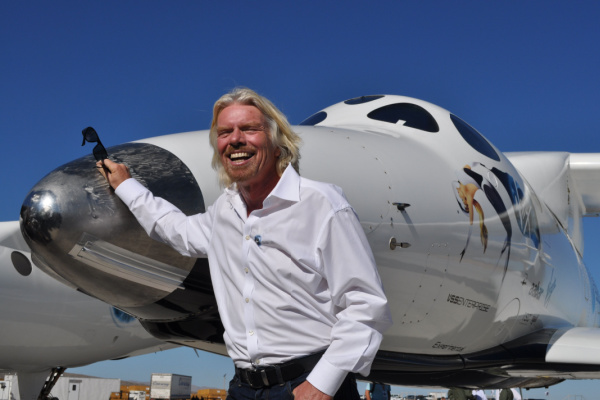
After almost two years since its last powered flight to space, Virgin Galactic is finally back in the “saddle” with its first unpowered glide, post renovations. Next up, the company plans to do a powered test flight before resuming commercial spaceflights.
Initially, Virgin Galactic hoped to launch a few months after its Unity22 mission with company founder Richard Branson in 2021. However, an FAA investigation into a mishap on that flight and then a year-long refurbishment process on both VSS Unity and VMS Eve (Unity’s mother ship) pushed the next flight back to where we are today.
According to 9to5Google, now that refurbishment is complete, Virgin Galactic has begun testing the changes and upgrades made to VSS Unity, the part that goes into space. Unity remained at Spaceport America for its promotions, but the mothership, Eve, flew back to Virgin Galactic’s main base of operations at Mojave Air and Space Port in California. On its second test flight, Eve relocated back to New Mexico to begin captive carry flights with Unity.
The glide flight took place on the morning of April 26, and is the final flight before Virgin Galactic completes a powered flight of Unity’s hybrid rocket engine. After reaching an altitude of 47,000 ft, Unity was released from Eve at 9:47 a.m. ET for a nine-minute glide to Spaceport America’s runway.
The mission has three objectives, evaluate the performance post modifications, continue to learn more about how the vehicle flies, and gather data on a new pylon attached to Eve on ascent. Virgin Galactic said the results of this flight will take a few weeks to process before Unity returns to space.
After the test, Virgin Galactic said the glide flight closes its “final validation test points” of a campaign to ensure the aircraft and space plane are ready to resume powered flights. To that end, the company said data collected during the flight will be analyzed in the coming weeks, and assuming the review goes well, the next mission will be a powered spaceflight.
That flight will carry two pilots and four company employees, who will serve as “mission specialists,” to evaluate the customer experience during the mission. And if that flight goes well, Virgin Galactic said it is prepared to commence commercial service during the second quarter of 2023. The first commercial flight will carry officials with the Italian Air Force.
According to ARS Technica, last Wednesday’s flight marked the first time that VSS Unity has made a flight independent of its carrier aircraft since July 2021, when it rocketed Virgin Galactic founder Richard Branson and employees Beth Moses, Sirisha Bandla, and Colin Bennett to an altitude of about 85 km.
Since then, the company has grounded both the aircraft and the spacecraft for modifications intended to increase the flight rate and reliability of the vehicles. However, such a prolonged downtime has raised questions about the financial viability of Virgin Galactic’s space tourism ambitions.
With the recently completed modifications, Virgin Galactic will aim to fly VSS Unity once a month. That is far below the cadence of flights needed to approach profitability. The company’s ultimate goal is the development of a line of “Delta” class of spaceships, with a turnaround time of one week. With a fleet of Delta ships, the company believes it can meet a profitable flight rate of 400 missions a year. But the Delta ships are unlikely to be ready for test flights before at least 2025, and commercial service would not begin until a year after that.
—
Photo Credit: Jared Ortega / Shutterstock.com
