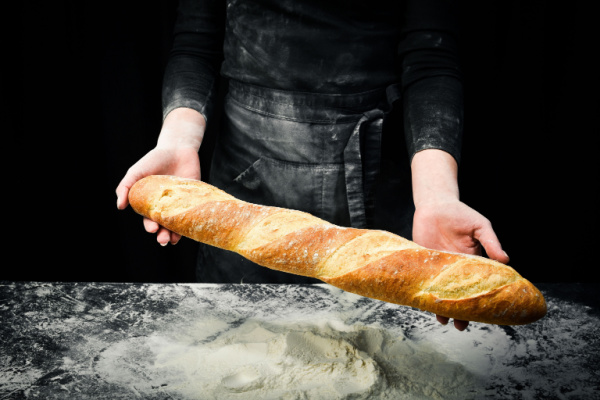
Breaking foodie news fresh out of the oven: Baguettes, the French food staple, are receiving the international acclaim they deserve.
UNESCO experts gathering in Morocco this week decided that the simple French flute — made only of flour, water, salt, and yeast — deserved United Nations recognition, after France’s culture ministry warned of a “continuous decline” in the number of traditional bakeries, with some 400 closing every year over the past half-century.
The Washington Post reports that “the baguette has now earned special recognition by the United Nations as an integral part of humanity’s cultural heritage.” UNESCO, the United Nations Educational, Scientific and Cultural Organization, has added the “iconic, long bread loaf,” including the culture and craftsmanship of baguette-making, to a “list that offers not just international recognition, but the option of applying for funding to preserve this ‘intangible’ heritage for future generations.”
The agency defines intangible cultural heritage as “traditions or living expressions inherited from our ancestors and passed on to our descendants.” According to CNN Travel, baguettes will now be among the UN’s other honored delicacies, including the making of Neapolitan pizza, Belgian beer culture, Arabic coffee, and more.
The U.N. cultural agency’s chief, Audrey Azoulay, said the decision honors more than just bread; it recognizes the “savoir-faire of artisanal bakers” and “a daily ritual. It is important that such craft knowledge and social practices can continue to exist in the future,” added Azoulay, a former French culture minister.
France’s renowned baking industry reportedly led a years-long campaign to add the baguette to the Intangible Cultural Heritage of Humanity list. “The baguette is very few ingredients — flour, water, salt, yeast — and yet each baguette is unique, and the essential ingredient every time is the baker’s skill,” said Dominique Anract, president of the National Confederation of French Bakery and Patisserie.
Despite the decline in traditional bakery numbers today, France’s 67 million people still remain voracious baguette consumers — purchased at a variety of sales points, including in supermarkets. The problem is, observers say, that they can often be poor in quality. “It’s very easy to get bad baguette in France. It’s the traditional baguette from the traditional bakery that’s in danger. It’s about quality not quantity,” said one Paris resident, Marine Fourchier, 52.
With the bread’s new status, the French government said it planned to create an artisanal baguette day, called the “Open Bakehouse Day,” to connect the French better with their heritage.
—
Photo Credit: YARUNIV Studio / Shutterstock.com
