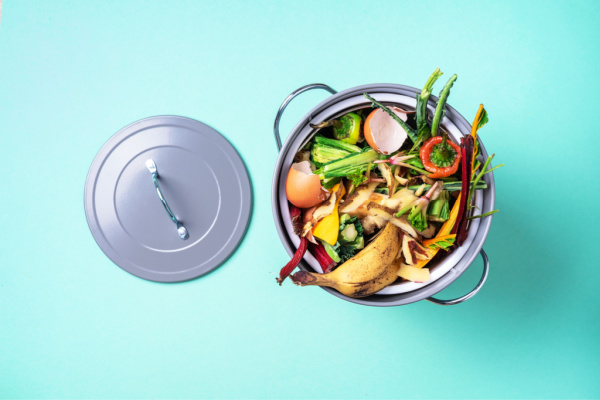
The food waste problem has existed ever since technology enabled us to produce more food than we actually need; and like many other environmental issues, it can’t be solved until every one of us gets involved. But according to the site Greener Ideal, while the bad news is that we have created a real problem, the good news is it’s totally solvable and preventable with minimal efforts from the end consumers.
First, the Facts of the Food Waste Problem:
- Regarding solid waste, according to Environmental Protection Agency, each person in the U.S produces approximately 4.6 pounds of garbage per day, which translates into a whopping 230 million tons of “trash” produced every year. Per Person.
- Meanwhile, in their latest discovery, Unenvironment shares a stunning report regarding food waste: The U.S alone takes up nearly ⅓ of the world’s food waste, specifically 66.5 million tons.
- Run the numbers and you’ll see food waste alone takes up to 29% the amount of trash each year, and that’s just in the U.S.
- In Japan, nearly 20 million tons of food is thrown away each year, 9 million of which is still usable and yet to pass its expiration date!
- In the world, approximately 1.3 billion tons of food are being discarded each year, turning into food waste, also according to the site.
- This amount of food waste takes up ⅓ the amount of trash produced each year, and it shouldn’t be.
- Organizations are struggling to handle such an enormous amount of waste, but it is still impossible to recycle everything as it depends much on the nature of each kind of trash itself.
- Most importantly, more food waste equals less resource spent to reduce and recycle plastic and hazardous waste.
- It’s impossible to completely get rid of plastic use, but we can eliminate the food waste problem.
Now, the 9 Easy Food Waste Solutions:
1. Respect Your Food: Shop Efficiently. Just don’t overbuy. It’s really that simple. Are you stocking up for the Zombie Apocalypse? Don’t. Buy enough to make sure they all get digested in your stomach. This food waste solution helps minimize food waste. It also keeps the numbers at the bottom of your grocery bills lower. Stop Food Waste AND Save Money. Win-Win!
2. Be Smart About Food Storage. Here’s a true fact about foods that many people, surprisingly, do not know: According to Greener Ideal, foods can be contaminated if not stored properly. If you’ve been applying the freezing method your entire life, there are also other tips that you might find helpful:
- Not everything freezes and then tastes well when reheated, especially those with high water content. It can freeze alright, but once the ice crystals are formed, unfreezing them results in limpy greens that are no longer crispy to the bite.
- If you’re storing raw meat, be sure to take a clean paper towel and slightly wipe all over the surface to absorb all moisture. Molds form in moist surfaces more quickly than usual.
- For meals that are supposed to be eaten during the day and there’s no room in the fridge, at least cover it with reusable food wrap. Foods left out in the open air is the best home for disease-causing pathogens!
3. Don’t Be Picky. “This apple tastes supreme, but the core with 99% edible flesh and 2 inedible seeds seems repelling, so I’m throwing away the core.” “These strawberries’ sweetness is divine, but I’m going to cut out and discard the top with half of it being the edible flesh and the other being the stem.” If somehow you possess one of these thoughts, you are contributing to the production of food waste more than you already are. Pick out the seeds and eat the whole apple. There are like 2 or 3 of them. Pick the stems out with your hands. There is more edible food in your food than you think.
4. Date Your Food. Instead of wondering if something is still edible because you forgot when you bought it, start putting labels with date of storage on your food packages. According to Greener Ideal, this is one of the best food waste solutions, especially for foods you store in the fridge. Do this, and you will no longer have to throw away food because you’re not sure “if it’s still good.”
5. Re-purpose to Reduce Waste. Food scraps might look unappetizing and unsuitable to be served on plates, but they don’t necessarily belong to the trash bin. Want to learn an easy food waste solution that takes care of leftovers? Here’s a tried and true trick from my Depression-era great grandmother: make soup. Fill the pot of vegetable or meat scraps with plain water, heat it on low for 2-3 hours and you’ll have a delicious (and nutritious!) broth for risotto, soups or even stews.
6. Transform Leftovers into Casseroles. This follows the same line of thinking as the soup scenario. If those leftovers are looking stale and tired, make yourself a leftover casserole! Isn’t that the way the legendary pizzas were invented in the first place? The key to reducing food waste comes down to just the matter of creativity. Who knows? You might just come up with your next Foodie Fav, ready to get a million likes on TikTok.
7. Don’t Throw Away Food if it hasn’t Expired. Although this seems quite obvious, many people still throw their foods away, even when it’s just close to their expiration dates. So, should you throw it away when it’s past the expiration date? It depends.
- “Best if Used By, Best By, Best Before” are terms that indicate a product is best to be used before that date, not the expiration date. The product is still usable within several days after this date.
- “Use By”, meanwhile, can be a little tricky to denote. While it means “throw-away” date in the EU, it conveys “still usable but tastes worse after [date]” to consumers in the U.S. Either way, for the sake of your health, throw the product away when it’s past “Use By” date.
- “Expires on” is the “deadline” for your food: after this date, the product is no longer usable.
So, by knowing your terms, you just saved quite some money and the planet.
8. Install a Garbage Disposal. In some countries, like Japan for example, trash is categorized and treated differently. Therefore, food waste gets to be chopped up into small pieces in factories and either decomposed into plant food, or buried in landfills to produce methane gas, a source of fuel. However, in many other countries, organic waste is oftentimes dumped directly down the drain. This could easily clog the drain and cause great damages to the drainage system, which are not designed to deal with big chunks of solid food waste. With a garbage disposal machine right under your sink, food waste can be pulverized and essentially liquefied, making it easier for the system to deliver it to the right place. There are currently loads of garbage disposals on the market, with different brands featuring their unique functions. It’s not easy to choose what you need amongst that big collection. And, “sink incinerators” aren’t as pricey as you think. Most can be found for just around $100.
9. Start an Earthworm Farm. According to Greener Ideal, Composting is the most effective method of treating food waste, and unlike general assumption, it can easily happen right inside your house. This may sound a bit creepy, raising a bunch of earthworms in a box somewhere near your kitchen, where you cook. But considering that raising these little compost makers turns out to be quite helpful in turning your life Eco-friendly, isn’t it worth the effort? Simply go to a fish store, get a box of them, put some soil in it and start throwing in food scraps. The smaller the pieces, the quicker these worms work their magic. Oh and don’t feed them meat (any kinds of meat), bones, fish, dairy products and oily foods as these will produce odor that attracts flies. After just a few days, you’ll have plenty of rich soil to grow onions, potatoes or any house plants for your kitchen!
Stopping food waste is easier than you think. Just adopt any/all of these nine simple habits, and you can drastically cut down on your kitchen waste, save a ton of money, and save the planet!
—
Photo Credit: j.chizhe / Shutterstock.com
