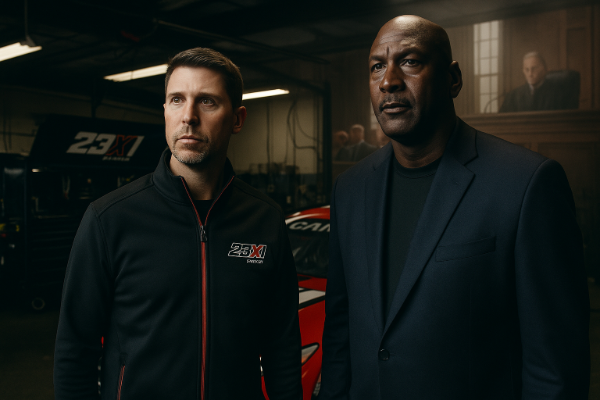
In a dramatic legal clash that could reshape the future of NASCAR, 23XI Racing, co-owned by NBA legend Michael Jordan and NASCAR veteran Denny Hamlin, has taken the sport to court. The team filed a federal antitrust lawsuit alleging that NASCAR’s charter system and revenue-sharing structure suppress fair competition and favor a select few, leaving independent teams financially strained.
Testifying on the opening day of the trial in Charlotte, Hamlin delivered a strikingly emotional account of his racing journey and the harsh economic realities teams like 23XI face. Fighting back tears, he described choosing the track over his father’s business and pouring tens of millions of dollars into building a competitive racing operation.
Hamlin disclosed that it costs approximately $20 million annually to field just one car in the NASCAR Cup Series. The expenses range from track access fees and equipment to Internet access and staffing. In 2022 alone, 23XI paid NASCAR over $703,000 merely to participate. The team also invested around $35 million to build a new race shop, while incurring significant ongoing costs tied to technical partnerships and operations.
According to Hamlin, the updated charter agreement proposed by NASCAR for 2025 to 2031 would have financially crippled his team. He characterized signing the deal as “signing our death certificate,” citing limited revenue opportunities and increased dependency on NASCAR’s centralized control.
The lawsuit paints a picture of a system where NASCAR wields considerable influence over key aspects of racing — from controlling suppliers and parts to deciding who gets charters — while teams are left with little bargaining power or room for innovation.
If the court rules in favor of 23XI Racing, the verdict could dismantle or reform the current charter model, forcing NASCAR to rethink how teams are admitted, funded, and supported. While this might open the door for greater competition, it also risks upheaval across the sport’s existing financial structure.
For NASCAR and its stakeholders, this trial is more than a legal battle — it’s a public reckoning with how power, money, and survival intersect at 200 miles per hour.