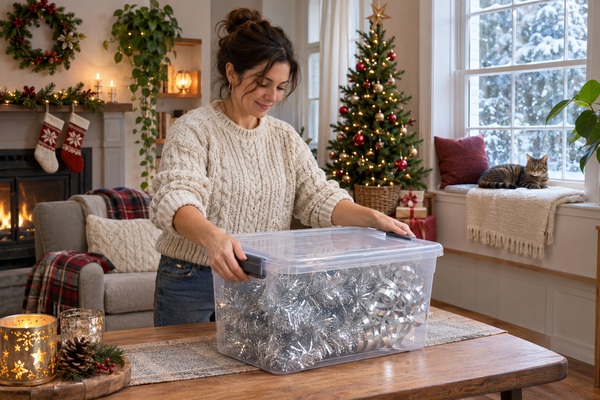
The decoration that moves with the slightest breeze can also be the one a cat wants to investigate. If you are opening holiday boxes this weekend, give tinsel and long curling ribbon their own decision: they do not need a place on the tree or under it.
This is more than a concern about a messy living room. VCA’s veterinary guide explains that long, thin swallowed objects can become anchored inside the digestive tract. The intestines can bunch around the material and suffer serious injury. A strand that looks delicate in your hand is not necessarily harmless once swallowed.
Make the choice while the supplies are still contained. Keep tinsel and ribbon in closed storage the cat cannot access, and clear wrapping scraps as you work. Ask other people decorating or bringing gifts to follow the same plan. A ribbon-free present is easier to arrange in advance than to supervise throughout a busy evening.
Do not use a leftover strand as an improvised cat toy. Set out an appropriate toy instead, then put the wrapping materials away before leaving the room. The goal is to remove an avoidable temptation, not to rely on catching the cat at exactly the right moment.
If a strand may have been swallowed
Contact your veterinarian or an emergency veterinary clinic promptly. Pet Poison Helpline’s guidance says to seek help right away after tinsel ingestion and never pull a strand protruding from the mouth or rear; pulling can worsen the damage. Do not try to make the cat vomit unless a veterinary professional directs you.
Tell the clinic what the material was, when you noticed the problem and what is missing. Vomiting, refusal to eat, unusual lethargy or abdominal discomfort are concerning, but do not wait for symptoms after a suspected ingestion. Keep a sample or package if it is readily available without delaying care.
The sparkle can come from something other than loose strands. A simpler decorating plan leaves one less holiday hazard to manage.
