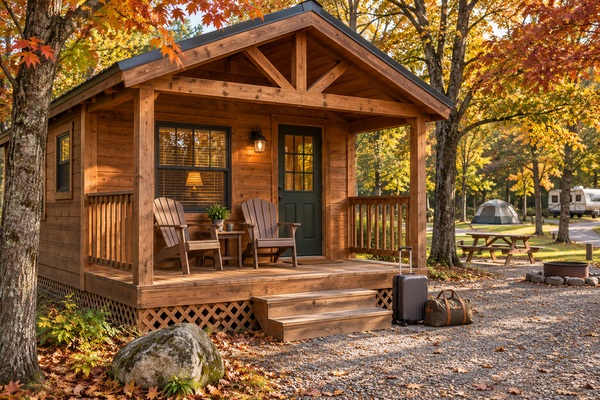
The photograph shows a porch, trees and a bed inside. That may be enough to start imagining a cabin weekend, but it is not enough to pack for one. Before booking, picture the first evening after the car is unloaded: where will you wash up, make dinner and sleep?
Cabin names can conceal meaningful differences. In KOA’s cabin overview, Camping Cabins provide beds and electricity, while Deluxe Cabins include private bathrooms. Kitchenettes and other features vary. Those distinctions are useful starting points, not a substitute for reading the listing for the exact unit at the campground you choose.
Start with the bathroom. Is it inside the cabin, or will everyone use a shared facility? If it is shared, ask where it is relative to the unit and whether the route suits your group after dark. A short daytime walk can feel like a different arrangement when someone wakes during the night.
Plan dinner before packing the cooler
Next, decide what you actually want to cook. Ask which appliances, dishes and cooking spaces come with the reservation, and what cooking is permitted. A photograph of a counter does not tell you whether it includes a sink, stove or equipment for the meal you have in mind.
Then work through sleeping arrangements. Confirm the number and size of beds, occupancy limits and whether bedding and towels are supplied. Ask about heating for your dates rather than assuming a cabin will feel like a hotel room. If a pet is coming, check the rules for that specific accommodation before paying.
Keep the answers together with the reservation. They can become a short packing list: what the cabin supplies, what your group brings and what you will buy or do elsewhere. Share it with everyone contributing food or gear so that three people do not pack the same pan while nobody brings the required bedding.
A cabin can be a satisfying way to spend time at a campground. The best choice is the one whose everyday arrangements fit your group, not simply the one with the most inviting porch.
