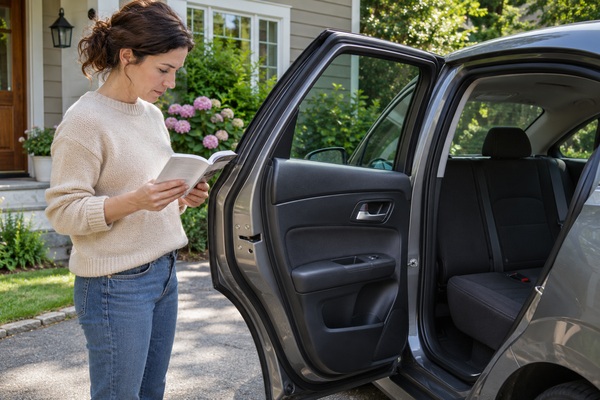
A rear passenger pulls the inside door handle and nothing happens. Before assuming the handle has broken, check whether the vehicle’s child safety lock is engaged. Then check something else separately: the control for the rear windows.
These features can have different jobs. In Ford’s owner documentation, the child safety lock prevents a rear door from being opened from inside, while the rear power windows can still work unless their separate control is locked. Pressing a window-lock button is therefore not evidence that the door’s child lock has been set.
The exact arrangement depends on the vehicle. Some controls are on a rear door’s edge; other vehicles use different systems. Do not copy a switch direction or procedure from a different model. Find the child-lock and window-control sections of the owner’s manual for the vehicle you are actually using.
Check before passengers settle in
Do this with the vehicle safely parked. Identify the controls, read how the manufacturer says to confirm their operation and check each relevant rear door. If a manual describes separate locks for each side, one successful check does not establish the setting on the other side.
Make sure the adults traveling with you understand how passengers will get out. Someone who is unfamiliar with the setting should not have to discover it during a hurried stop. If a door or window does not behave as the manual describes, arrange qualified help rather than guessing at a repair.
Child locks are not a substitute for the correct child restraint, a properly used seat belt or adult supervision. They also are not a reason to leave a child unattended in a vehicle. Their purpose is narrow; the rest of the passenger-safety plan still matters.
When you return a borrowed car or change who normally rides in the back, tell the next driver which settings you checked. A brief handover can prevent an unfamiliar safety feature from becoming an unnecessary mystery at the next stop.
